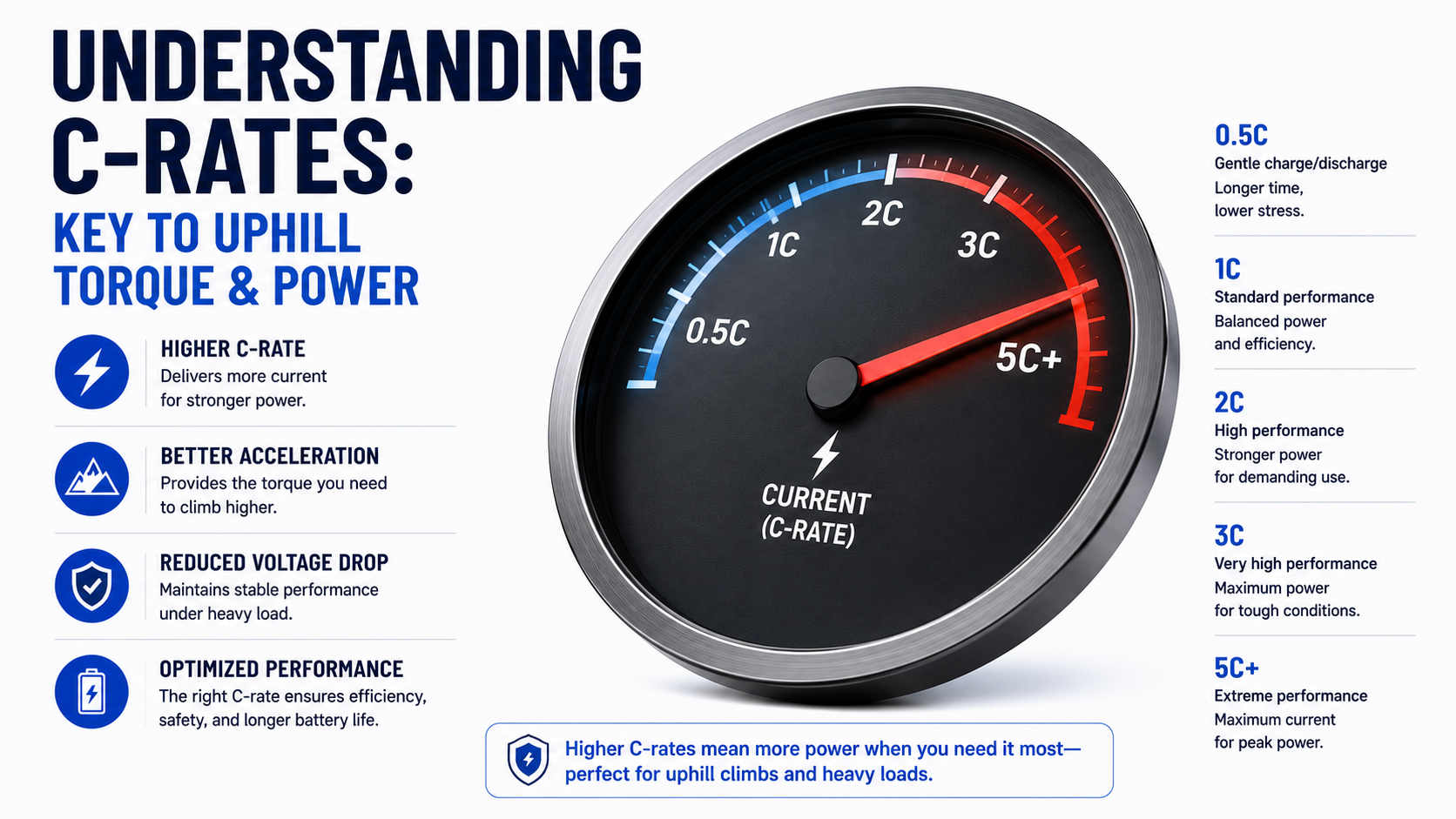
The C-Rate defines a battery's power density. For high-torque demands like hill climbing, a motive battery must support a high peak discharge rate (typically 2C or higher) to avoid BMS tripping.
Capacity (Amp-hours) tells you how far you can go, but the C-Rate tells you how much power you can pull at once. A 100Ah battery discharging at 100A is operating at 1C.
Golf carts and LSVs require sudden bursts of energy when starting on a slope. If a battery has a low C-rate, the BMS will sense an over-current event and shut down to protect the cells. WVMILFE utilizes high-discharge motive cells designed to handle these surges, ensuring uninterrupted power when you hit the accelerator.